Questions to ask
Questions to ask your parents about their life and childhood
The best questions to ask your parents are specific and open: ask where they grew up, how they met, how they found their work, what raising you was really like, and what they hope for you. Ask one question at a time, listen more than you talk, and write the answer down the same day in their words. Our guide on how to record a parent's life story shows simple ways to keep the answers, and the Mom and Dad journals hold them in one place.
Last updated
Why ask your parents about their life
Most of us know our parents as parents: the people who packed lunches, worried about grades and drove us everywhere. We rarely know the person who came before that, the child with a favorite hiding place, the teenager who broke the rules, the young adult working out what to do with a life.
Those stories come out when someone asks, and they stay when someone writes them down. Below are ten good ones, placed by stage of life. Most of them link to a full guide with why the question works, how to ask it, follow-up ideas and an example answer.
You do not need a plan. Choose the one question you are most curious about and ask it the next time you are together or on the phone. Most parents are glad to be asked, and one good answer nearly always leads to the next question.
Questions about childhood and growing up
Start here. Early memories are easy to share and often bring a whole household with them: a street, a smell, a sibling, a family routine. The school and teenage years are where people become themselves, and those answers are often the funniest. For more ideas, see the childhood questions and the school days questions.
- What is the very first thing you can remember?
- What were your parents like? Describe each of them in a few words.
- What did the house you grew up in look, sound and smell like?
Questions about their work
Work fills most of an adult life, yet many of us know little more than a job title. Ask how they got started and what they did with the first money they earned. The answers often hold advice you will want for your own working life. There are more in the questions about work.
Questions about love and how they met
How your parents met is the first chapter of your own story. Ask each of them separately if you can: the two versions rarely match, and the differences are often the best part. If your parents are no longer together, ask gently and let them choose what to share. More ideas are in the love and marriage questions.
The Tell Me Your Story journals
 Instant download
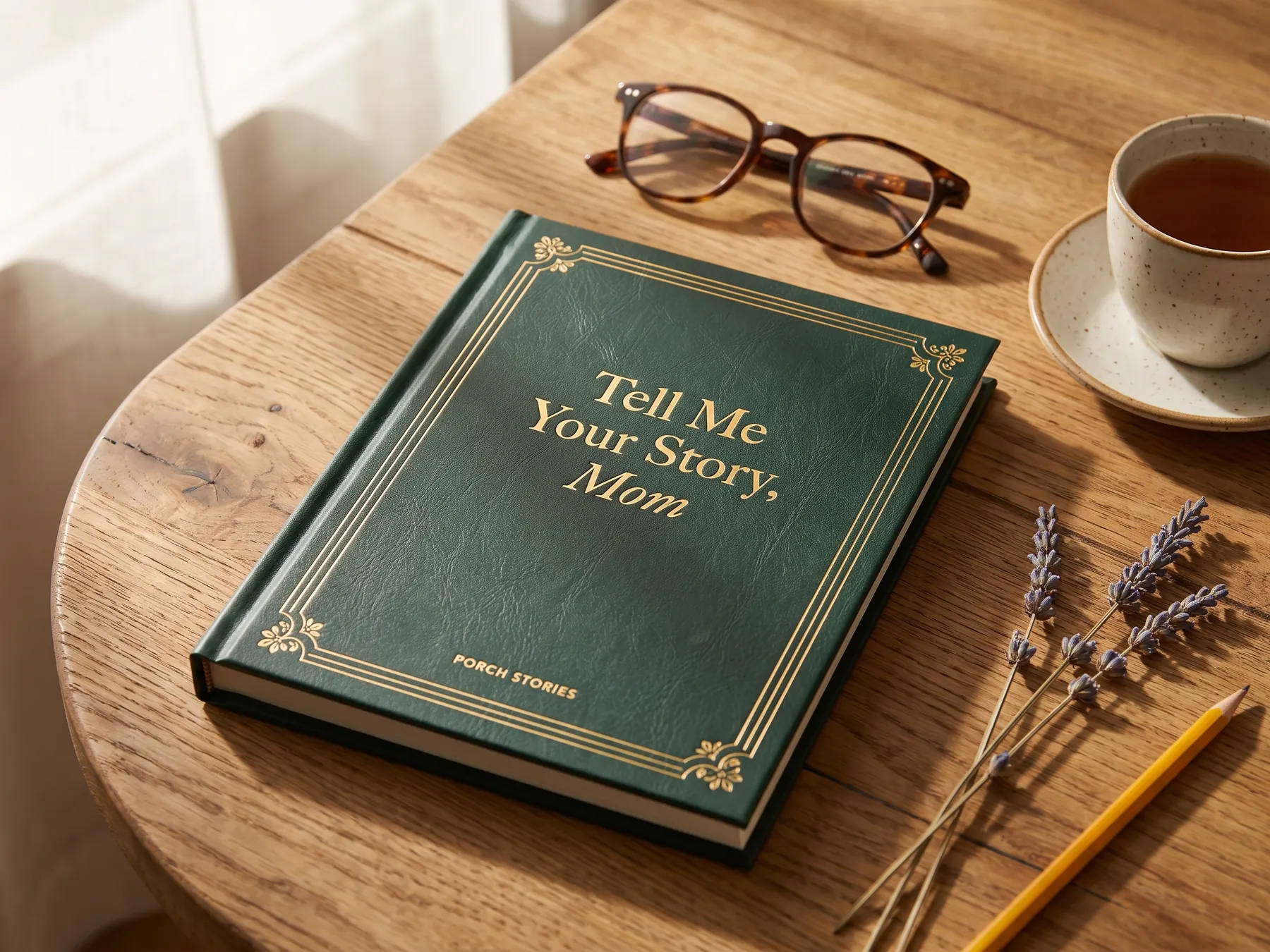
Tell Me Your Story, Mom
For the mom who knows your whole story. Now ask for hers.$10.99See the journal Instant download
Tell Me Your Story, Dad
For the dad who answers “nothing much” when you ask about his life.$10.99See the journal Best value
The Porch Stories Family Bundle
All four journals: Mom, Dad, Grandma and Grandpa.$24.99See the journalQuestions about raising you
These are the memories you were there for but too young to keep. Ask about the day you were born, how they chose your name and when you made them proud. The answers are usually kinder than you expect. Find more in the family and parenting questions.
Questions about life lessons and hopes
Advice lands differently in a parent's own words. These questions give them a reason to put what they have learned into sentences, and give you something to come back to when you need it. Save them for a quiet moment, and let your parent write the answer if saying it out loud is hard. The advice and life lessons questions have more.
- What is the best piece of advice anyone ever gave you?
- How do you get through the hard days?
- Which family story do you want me to pass on to my own children?
- What would you like to say to me that you've never said out loud?
How to ask your parents about their life
The questions on this page are a small sample. The Tell Me Your Story, Mom and Tell Me Your Story, Dad journals hold 100 guided questions each, one per page with room to write, plus 120 quick memory questions, photo pages and a family tree. To start small, get the free 25 questions on one printable page.
- One question per conversation is enough. Let the answer wander where it wants to go.
- Bring an old photo. Ask who is in it, where it was taken and what happened that day.
- Ask for a scene, not a summary. Asking what the kitchen looked like gets more than asking what childhood was like.
- Record their voice on your phone if they are comfortable with it, then put the phone face down and forget about it.
- Write the answer down the same day, while the names and small surprises are still fresh.
- If talking is hard, give them the question in writing and let them answer in their own time and their own handwriting.
Questions, answered
What are good questions to ask your parents about their life?
Good questions are specific and open-ended: where they grew up, what their parents were like, how they met, their first job, what raising you was like, the best advice they were given and what they hope for you. Ask one at a time and let them tell it their way.
How do I get my parents to open up about their past?
Start with easy, concrete questions about places and people rather than feelings. Bring an old photo, ask for small details, and listen without correcting. Many parents find it easier to write an answer than to say it, so a journal they can fill in privately often works well.
Should I ask my Mom and Dad the same questions?
Many questions work for both, and asking each of them separately is worth it: their versions of the same story often differ in revealing ways. Some questions are naturally different, such as how each of them felt about becoming a parent.
How should I record my parents' answers?
Write them down the same day, or ask your parent to write them in a journal in their own handwriting. A voice recording on your phone is a good addition. Many families keep both.
Is there a printable list of questions to ask my parents?
Yes. The free 25 questions printable on this page is one page you can print or keep on your phone, and the Tell Me Your Story journals for Mom and Dad hold 100 guided questions each, with room to write.