Questions to ask · Family and parenting · for your grandma
Which recipe of yours should never be lost?
Every family has a dish that tastes like home, and it usually lives in one person's hands. Ask Grandma which recipe of hers the family should always keep, and then ask her to show you.
Why this question works
Food is memory you can taste. A grandmother's biscuits, her Sunday sauce or her holiday cookies carry decades of family dinners in them, and the question tells her that you know it. Asking which recipe should be kept is a compliment as much as a question: you are saying that what she makes matters enough to pass on.
It is practical, too. The dishes families love most are often the ones never written down. They are made by feel: a handful of this, butter the size of an egg, bake until it looks right. Asking gives Grandma a reason to slow down and put the method into words, and it gives you the chance to catch what a recipe card leaves out. The brand of flour is not the secret. The secret is that she lets the dough rest while she does the dishes, and you only learn that by asking and watching.
How to ask it
Ask in her kitchen, and ask to make it with her. Stand beside her with a notebook and write down what she actually does, including the things she does without thinking. Measure her handful. Time her "little while." Take a few photos of her hands at work, and of the finished dish on the plate it always goes on.
Be an eager student. Ask where the recipe came from and who taught it to her, because the story belongs with the ingredients. If she says it is nothing special, tell her which meal of hers you think about when you are far from home. Then make the dish yourself within a few weeks and call her with questions. She will love being consulted, and the recipe will truly be yours.
Other ways to word it
- Which dish of yours does the family ask for most?
- What recipe would you most like us to keep making?
- Will you teach me how to make it the way you do?
- What is the one thing you cook that nobody else gets quite right?
Follow-up ideas
- Who taught you to make it?
- When do you usually make it: holidays, Sundays, when someone is sick?
- What is the step people get wrong?
- Is there an ingredient you would never substitute?
- What pan or dish do you always use?
- Has the recipe changed since you first learned it?
- Who in the family loves it most?
- What did your own mother cook that you still miss?
An example answer
This is an invented example, written to show the kind of detail to listen for. Your grandma’s answer will be her own.
"My chicken and dumplings. It was my mother's recipe, and her mother's before that, and none of us ever wrote it down until your aunt made me do it last year. Even then I had to cook it three times so she could measure, because I do not use cups. I use the blue teacup with the chip in it, and I always have."
"The secret is not in the ingredients. Anybody can buy a chicken. The secret is that you drop the dumplings in and then you put the lid on and you do not lift it for fifteen minutes, no matter what. No peeking. My mother would smack your hand with a wooden spoon. I made it for every one of my children when they were sick and every time one of them came home from far away. If the family keeps one thing of mine, I hope it is that pot."
What to write down
Write the recipe twice: once as Grandma says it, with her handfuls and pinches, and once with the measurements you took while she cooked. Note the pan, the oven temperature, the timing and the step people get wrong. Record who taught it to her and when the family eats it. Ask her to sign and date the card. Her handwriting on a recipe is something to keep for good.
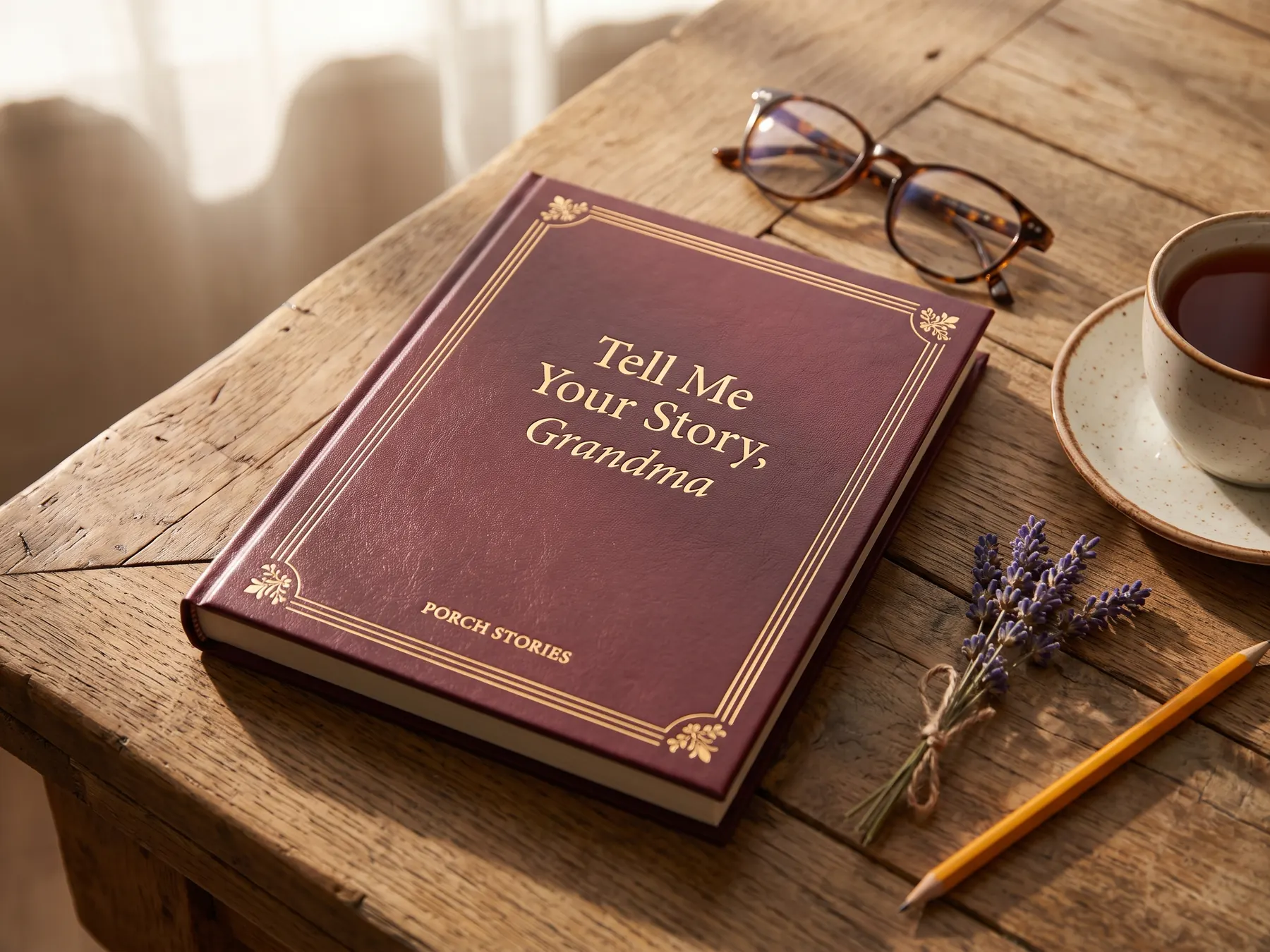
The Tell Me Your Story, Grandma journal gives a question like this one a full page, with room for her to write the recipe out in her own hand. A recipe in Grandma's handwriting is one of the most loved pages a family can own.
See the Tell Me Your Story, Grandma journal. For more ideas, read questions to ask your grandparents or browse family and parenting questions.