Questions to ask · Childhood · for your parents
What is your earliest memory?
An earliest memory is rarely a big event. It is a patch of sunlight on a floor, the sound of a screen door, a pair of red shoes. Asking your mom or dad for theirs is one of the quickest ways to meet them as a small child, years before they were anyone's parent.
Why this question works
This question works because there is no wrong answer and no pressure to be impressive. Your parent does not need dates or facts. They only need to close their eyes for a second and tell you what they see. First memories tend to be short and vivid, which makes them easy to share and easy to write down.
It also opens the whole childhood chapter without announcing it. Once your mom has described the kitchen she was standing in, you can ask who else was in the room, and the family appears one person at a time. A first memory is a small key to a large house. People are often surprised by how much they still carry: a color, a voice, the feeling of being lifted onto someone's shoulders.
How to ask it
Pick a slow moment. A car ride is ideal, because nobody has to make eye contact and the road gives a memory time to surface. A walk works for the same reason. Avoid asking in the middle of a busy family dinner, where a quiet answer gets talked over.
Ask gently and then leave room. Most people need ten or fifteen seconds to travel that far back, and it can feel like a long silence. Let it be one. If your parent says they are not sure it is a real memory or just a photograph they have seen, tell them that counts too. The point is the picture in their mind, not proof.
Other ways to word it
- What is the very first thing you can remember?
- When you think back as far as you can, what do you see?
- What is your first memory of your mother or your father?
- Is there a smell or a sound that takes you straight back to being little?
Follow-up ideas
- How old do you think you were?
- Where were you, and who was with you?
- What could you hear or smell in that moment?
- Do you remember how you felt: happy, curious, a little scared?
- Has anyone else in the family told that story a different way?
- What is the next thing you remember after that one?
An example answer
This is an invented example, written to show the kind of detail to listen for. Your mom’s answer will be her own.
"I am sitting under the kitchen table, and I can see my mother's shoes and the hem of her apron. She is rolling out dough above me, and a little flour keeps drifting down past the edge of the table like snow. I remember thinking it was my own private house under there. I must have been about three."
"The radio was on, some slow song, and she was humming along and getting the words wrong. That is really all there is to it. Nothing happened. But when I smell pie crust baking I am right back under that table, and I can still see the scuffed toe of her left shoe."
What to write down
Write the memory down in the present tense if that is how your parent told it, because it keeps the feeling of being there. Note roughly how old they were, which house it was and who else was in the room. Add the sensory details exactly as they were given: the color, the song, the smell. If they mention a second early memory, give it a line of its own.
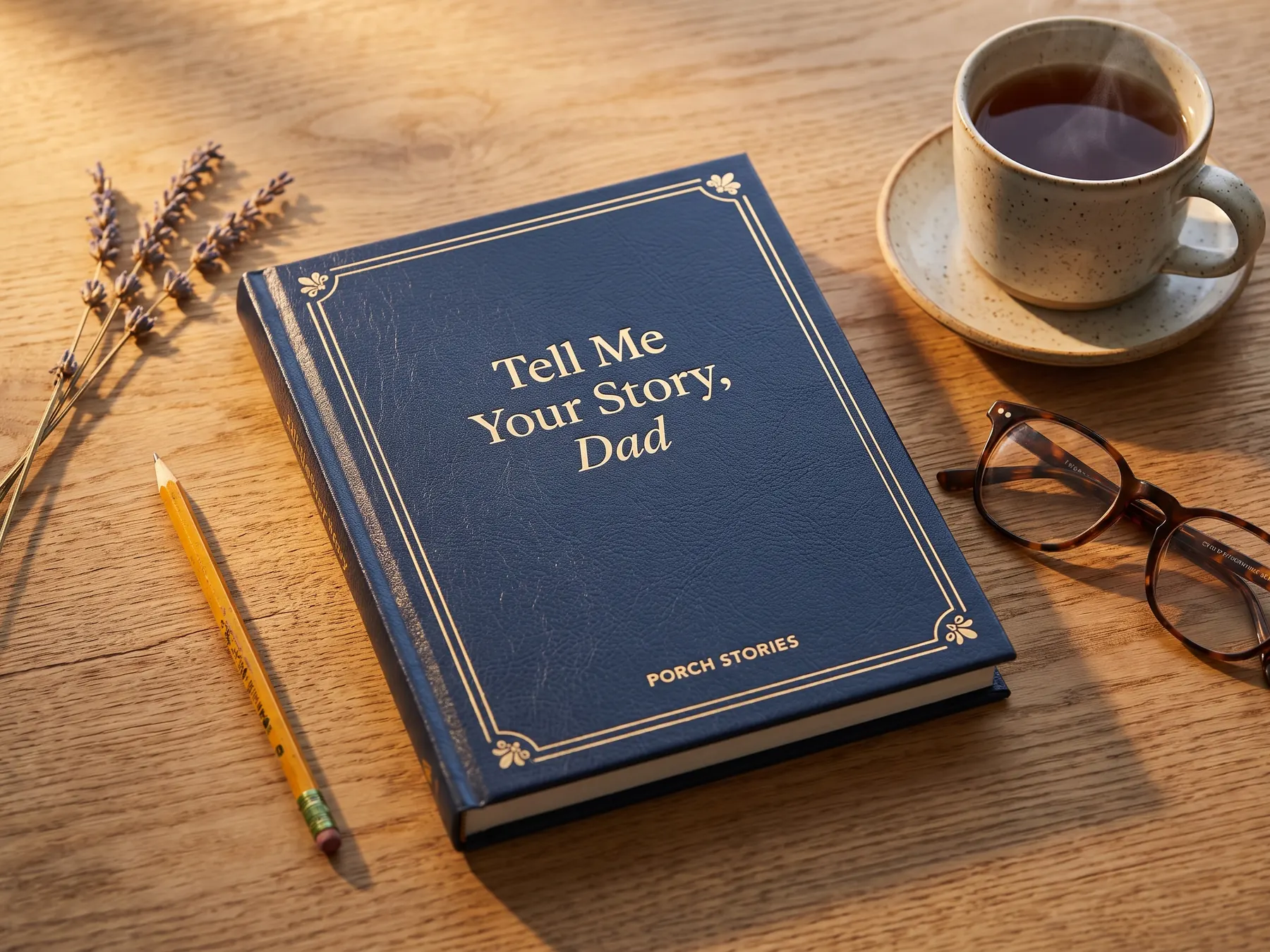
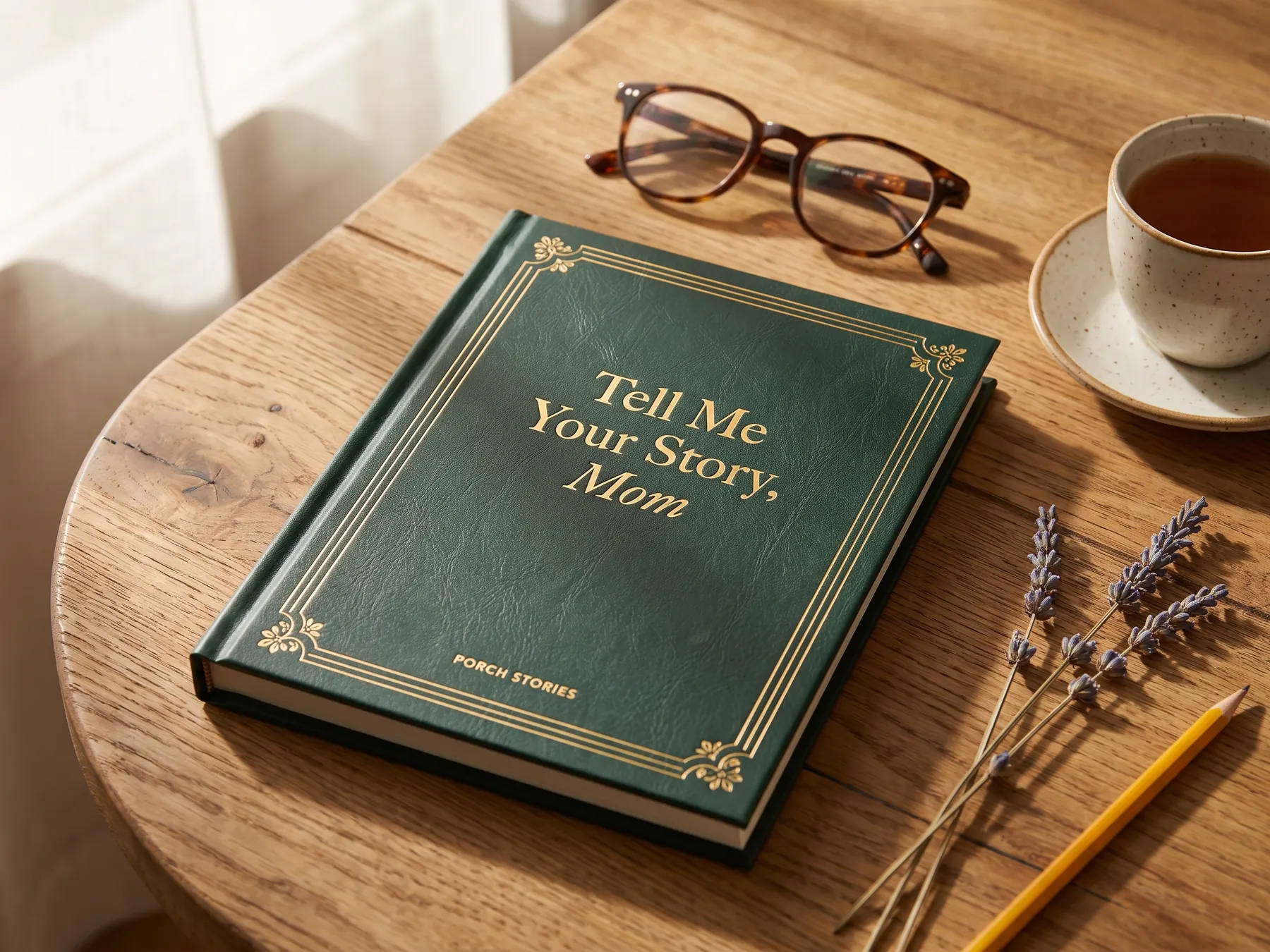
Small memories like this are what a memory journal is for. In the Tell Me Your Story journals for Mom and Dad, a question like this one sits near the very start, on a page of its own, so the first thing your parent writes is something only they could know.
See the Tell Me Your Story, Dad journal or the Tell Me Your Story, Mom journal. For more ideas, read questions to ask your parents or browse childhood questions.