Questions to ask · Advice and life lessons · for your parents or grandparents
What should I know about money and work?
Your dad and your grandpa have earned, saved, spent and worried about money for decades. Ask what they think you should know about it, and about work, and you will get lessons that no class covers.
Why this question works
Many fathers and grandfathers show their care through practical advice, and this question invites exactly that. It lets him be useful. He can tell you what he learned about saving, about debt, about choosing a job and about the difference between earning a living and making a life. He has probably been hoping you would ask.
The answer is grounded in real events. He has lived through lean years and good ones, raises and layoffs, purchases he is proud of and a few he would take back. Advice with that history behind it is worth far more than a rule from a book. You will also learn how he thinks about work itself: what makes a job worth doing, how to treat the people you work with, when to stay and when to move on. Whether or not you manage your money the way he does, knowing his reasoning helps you understand the choices he made for the family.
How to ask it
The right moment is whenever money or work is on your mind: a first job, a first apartment, a raise, a career change, a big purchase. Ask him side by side if you can, over a project, in the car or at the kitchen table with coffee. A practical setting suits a practical subject.
Ask him as someone whose judgment you respect. Then ask for the stories: the best money decision he ever made, and the worst. Men are often more comfortable teaching through an example than through a speech. If his advice sounds old-fashioned, listen for the principle underneath it, which usually still holds. Thank him, and tell him later when you have used something he taught you.
Other ways to word it
- What is the most important thing you have learned about money?
- What would you tell me about choosing a job?
- What money mistake would you help me avoid?
- How do you decide what is worth spending on?
Follow-up ideas
- Who taught you about money?
- What was the best financial decision you ever made?
- Was there a purchase you wish you had skipped?
- How did you get through the tight years?
- What makes a job a good job?
- When is it right to leave a job?
- What is worth more than money, in your experience?
An example answer
This is an invented example, written to show the kind of detail to listen for. Your dad’s answer will be his own.
"Three things. First, pay yourself before anyone else. When I got my first real job, your grandpa made me put a tenth of every check in savings before I bought so much as a sandwich. I complained for a year. That habit is the reason we could put a down payment on this house."
"Second, never buy anything to impress a person you do not even like. I bought a car in my twenties that I could not afford, because a fellow at work had one. I ate canned soup for two years to make the payments, and he never noticed the car. Third, and this is the important one, be the person who does what they said they would do. Show up on time and finish the job. I have seen plenty of clever people passed over for someone reliable. Money comes and goes. Your name is the thing you are really building."
What to write down
Write his advice as a numbered list, in his words. Under each point, add the story that goes with it: the best decision, the purchase he would take back, the tight year and how the family managed. Record who taught him about money in the first place. Note what he says is worth more than money. Then tell him, later on, which piece you put to use.
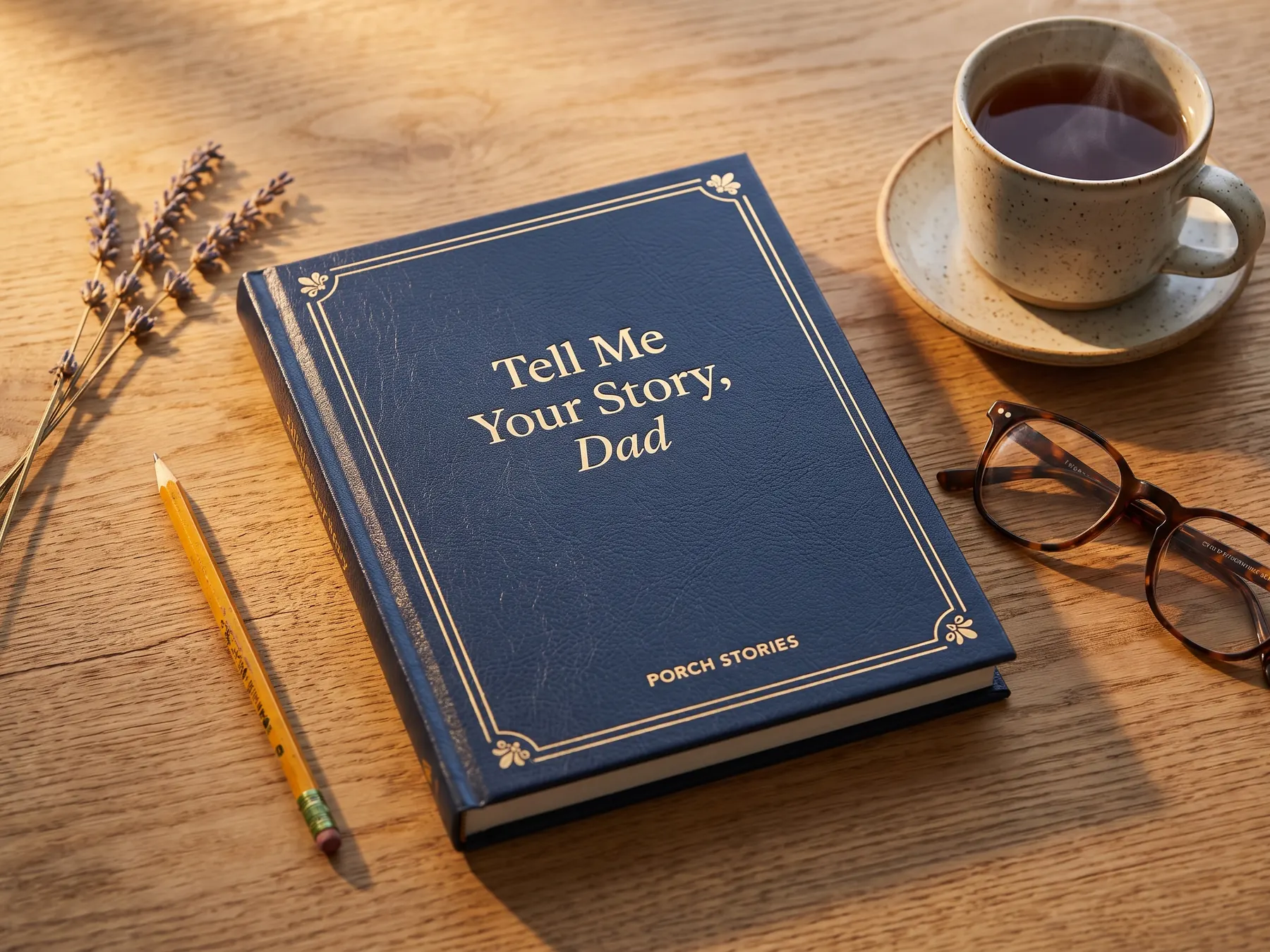
A question like this one has a page of its own in the closing chapter of the Tell Me Your Story journals for Dad and for Grandpa, the chapter written to the next generation. It gives him room to set down his practical advice in his own handwriting.
See the Tell Me Your Story, Dad journal or the Tell Me Your Story, Grandpa journal. For more ideas, read questions to ask your parents or browse advice and life lessons questions.